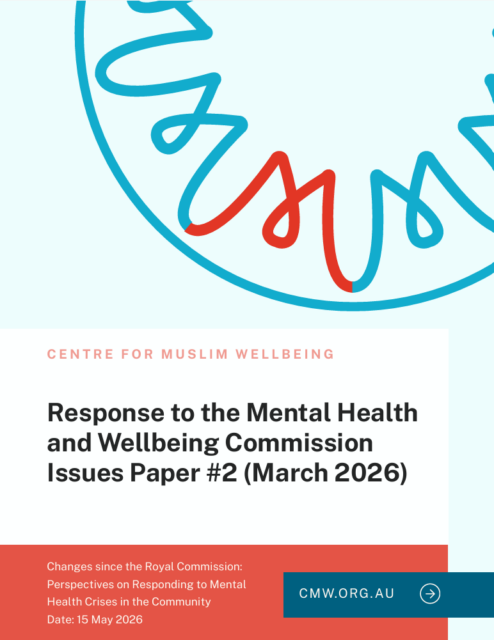

The Centre for Muslim Wellbeing (CMW) welcomes the Victorian Government’s Diverse Communities Mental Health and Wellbeing 10-Year Framework (2025–2035) and its accompanying First Blueprint for Action (2025–2028) — a landmark step toward a fairer, more inclusive mental health system.
This Framework arrives at a critical time, as communities continue to navigate the emotional toll of global conflict, genocide, displacement, and rising racism. Locally, mental health is now the leading reason Victorians visit their GP (RACGP, Health of the Nation 2025). Yet our health system remains ill-equipped to meet this growing demand — particularly for multicultural and faith-based communities. For young people, especially, mental health has become the defining well-being challenge of this generation.
With nearly half of Victoria’s population born overseas or to migrant parents, ensuring that reform reaches diverse communities is both a social and economic imperative.
CMW commends the Framework’s alignment with broader Victorian Government policies, including the Anti-Racism Strategy (2024–2029) and the Wellbeing in Victoria Strategy (2025–2035), as well as its commitment to intersectionality, human rights, and lived experience. These foundations are vital, but their impact will depend on their effective implementation. Words of inclusion must now become measurable action, supported by transparent data, equitable funding, and sustained partnership.
While the Framework’s inclusive approach is commendable, grouping multicultural, LGBTIQA+, and disability communities under one ‘diverse communities’ umbrella risks diluting focus and accountability. The distinct cultural, linguistic, and faith-based determinants of mental health require tailored actions, funding streams, and performance indicators to ensure equitable outcomes for Victoria’s migrant and faith communities.
Victoria has set a strong vision for inclusion and intersectionality,” said Ayman Islam, Executive Officer of the Centre for Muslim Wellbeing. “The vision is welcome — now the real test is whether funding and shared governance will follow so communities can lead the solutions.”
Muslim Victorians — more than 273,000 people across 70+ cultural backgrounds remain under-represented in service access, workforce leadership, and mental-health research. This gap reflects persistent barriers linked to stigma, racism, and the limited availability of faith- and culture-responsive supports. The Framework rightly recognises faith and spirituality as central to wellbeing. The next step is to embed these values throughout implementation — not only in principles but in programs, workforce training, and evaluation.
Transparency in data, outcomes, and measurement must also be co-designed with communities to build trust and ensure accountability.
Turning Vision into Measurable Change
To realise the promise of the Framework, CMW calls for targeted action across five reform priorities:
Governance and Accountability – Align reforms with the new Outcomes and Performance Framework and co-design equity measures with affected communities, and develop distinct accountability and funding pathways for multicultural and faith-based cohorts rather than grouping all under one “diverse communities” umbrella
Equity in Funding – Establish multi-year, equitable funding for community-led and faith-informed organisations.
Workforce and Capability – Build a diverse, trauma-informed, and faith-literate workforce with career pathways and wellbeing supports.
Faith and Culture in Practice – Embed faith literacy across public mental health services and partner with trusted community settings.
Inclusive Access – Expand youth and family-based programs and ensure regional and refugee communities are not left behind.
Victoria has laid a strong foundation but vision without investment risks deepening inequity. To build genuine wellbeing for all, this Framework must move beyond consultation and into shared power, transparent data, and sustained funding.
“Investing in community-led, faith-informed prevention isn’t just compassionate — evidence shows it’s cost-effective (VicHealth, 2020),” added Mr Islam. “Early, culturally safe support reduces hospitalisations and crisis presentations, while strengthening community cohesion and workforce participation.”
The Framework’s ambitions closely align with the Victorian Government’s broader mental health reform agenda, particularly the implementation of the Royal Commission’s recommendations for Victoria’s Mental Health System. CMW strongly supports the government’s continued investment in community-based, preventative care — including its commitments to expand local services, regional hubs, and culturally safe workforce development.
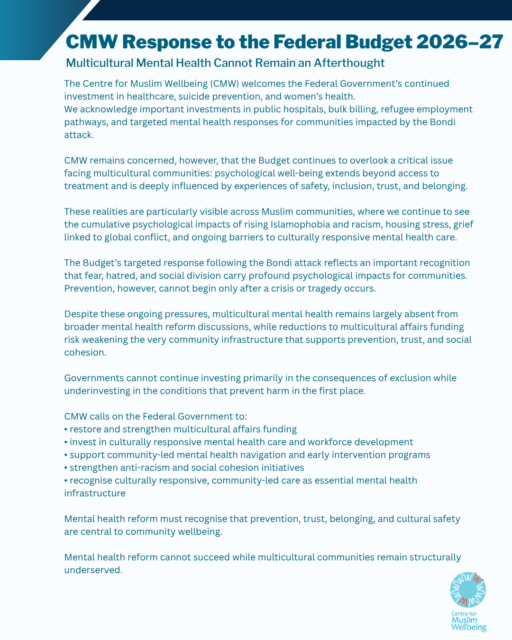
However, future investments must explicitly include faith-informed, community-led initiatives. Embedding this in upcoming budgets and implementation plans would ensure that the Royal Commission’s recommendations have a meaningful impact on Victoria’s Muslim and multicultural communities.
CMW urges the Victorian Government to act decisively:
Commit to multi-year funding, embed faith-based organisations in governance, and make equity measurable through public reporting. The next decade of mental health reform will be judged not by its promises, but by whether every Victorian, regardless of faith or background, can find healing, dignity, and belonging in the system built to care for them.
You can access the Victorian Government Framework & Blueprint here: https://www.health.vic.gov.au/diverse-communities-mental-health-wellbeing-framework-blueprint